

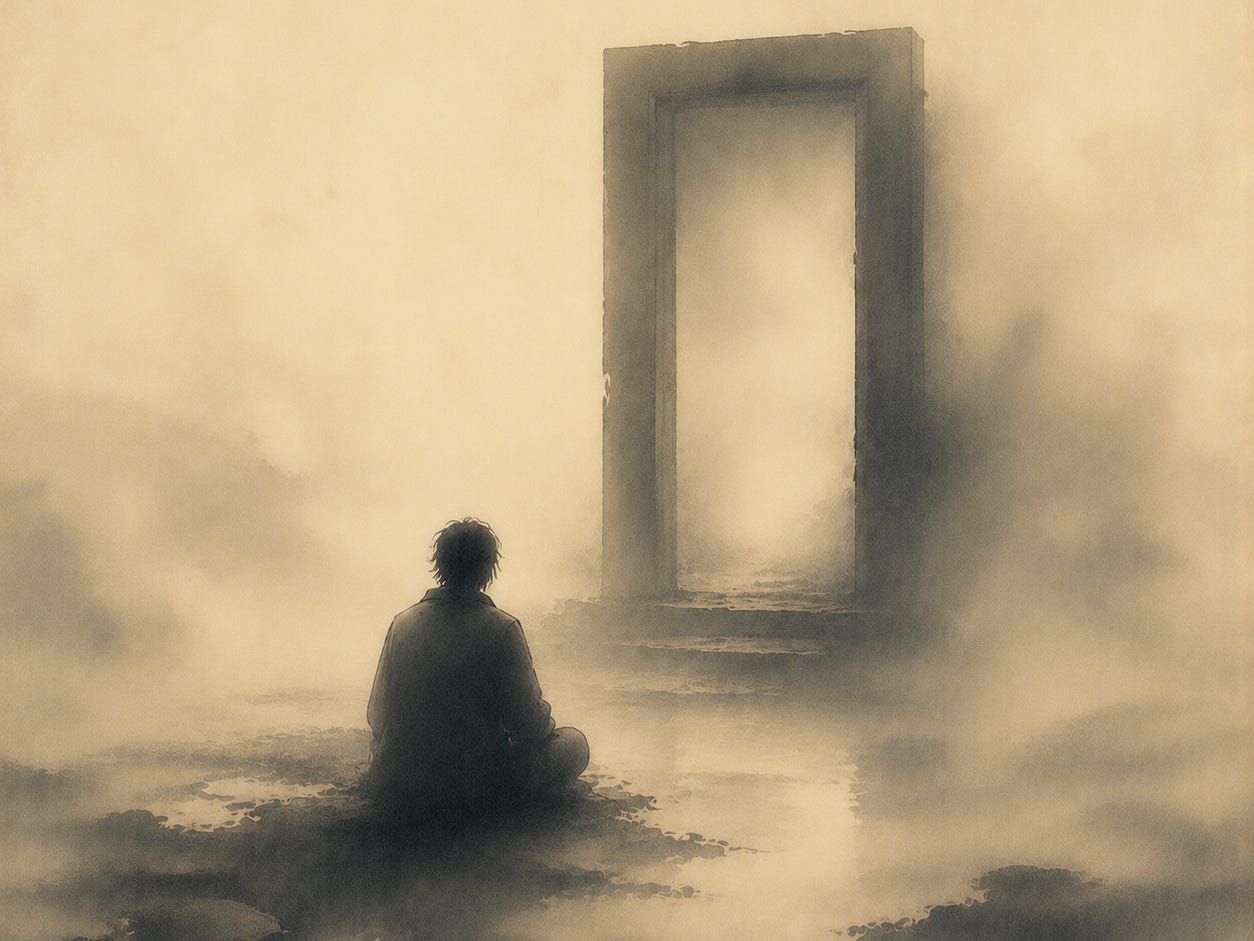
“I’m so bored.” You’ve said this line too many times to count. It comes out too smoothly, too naturally, almost without needing to pass through your brain at all. You say it while waiting for the bus, halfway through a party, at some random moment scrolling your phone. It’s become a reflex, an automatic broadcast that just slips out — you’ve never once stopped to question it, never thought to check whether this sentence is actually accurate.
Try checking it, just once, right now. Almost every time you say “I’m bored,” can it be solved by one small, light action? Bored waiting for the bus — the bus arrives, and it’s fine. Bored at the party — go home, lie down, and it’s fine. Bored scrolling your phone — swipe, switch to the next one, and it’s fine. This works so smoothly that you never notice how suspicious it actually is — a “boredom” that disappears the instant you swap out whatever specific thing is in front of you isn’t some bottomless emptiness at all. It has a very clear target: this damn bus, this dull party, this unappealing video. Swap the target, and the boredom swaps out right along with it.
This points to something rather deflating — the “boredom” you keep naming was never boredom itself. It’s just a more polite way of saying “this thing in front of me isn’t to my liking.” It’s as shallow as a thin film of water — one flash of sun, one gust of wind, and it’s gone. It doesn’t even need you to do anything; time only has to inch forward, and it dissolves on its own. The “I’m so bored” you’ve been saying your whole life may never have actually happened, not once.
So what would real boredom actually look like? Push a little closer to it — what would it feel like if, one day, you were bored to the point where you couldn’t even answer the question “what am I bored of”? Not that this party is dull, not that this video is unappealing — you can’t find a single concrete thing to point at at all. No target, nothing to swap out, no single thing that, once finished or replaced, would make the boredom dissolve.
That isn’t “this thing is dull.” It’s everything, all at once, falling silent toward you together. Ordinarily, you never even notice that everything around you is silently deciding your next move for you — a notification pops up on your phone, and your finger moves on its own; a to-do list sits there, and your body has already started the next item before you even have to think. All of this has been quietly telling you which way to go, and you’ve never once felt what it’s like without them telling you.
But in that true kind of boredom, all of these guides go dark at once. Nothing looks more important than anything else, and nothing looks less important either — it’s as if every gradation has suddenly been pulled out of the world, and you’re left in a completely boundless emptiness, with nothing telling you what to do next. Not even “you yourself” can answer that question.
This isn’t boredom turned up a notch. It’s something else entirely, a different kind of thing altogether. It forces you, for the first time, to hear a question that’s normally buried under a life crammed too full to ever let it surface — if nothing is telling me what to do, who am I, really, and what am I actually living for. This question won’t make you comfortable. But it’s precisely because it’s uncomfortable that it becomes possible, for the first time, to actually be heard — when you’re busy, as usual, this question can’t even knock on the door.
So — you think you’ve been bored to the absolute limit, that restless feeling where you can’t sit still and just want to find something, anything, to do. In reality, you’ve never even come close to touching the real boundary of boredom. Because that shallow kind of boredom always leaves you an escape route — switch to something else, swipe, take a walk, and it’s gone. But real boredom gives you nothing to swap. It takes away every escape route, leaving you alone, face to face with that question.
That true kind of boredom — you may never have experienced it, not even once. Not because your life is too full, but because there’s always something within reach that can be swapped out — and that thing, every single time, closes the door before it ever truly gets the chance to open.