

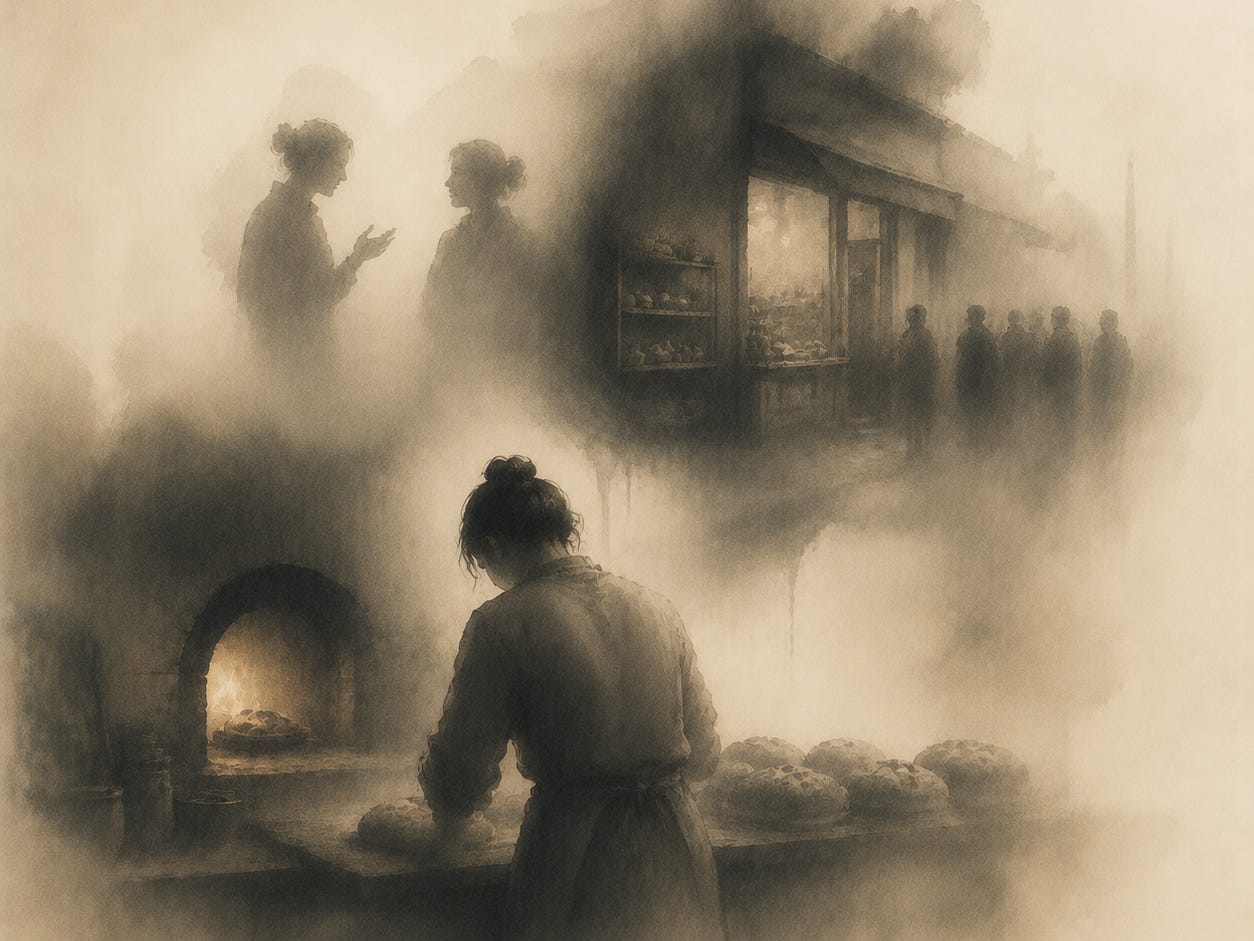
A friend of mine loved baking, and had been at it happily for years. On weekends, he’d bake a loaf of bread or a cake at home, take a photo, post it — the caption always in that light, easy tone.
Then the people around him started urging him: “Your skills are so good, why not open a shop?” After hearing it enough times, he actually did. Talking to him again half a year later, he said just the sight of the oven annoyed him now.
A lot of people have probably gone through this same transformation — the only difference is which prop each person happened to use. For some it’s photography, going from casually documenting life to having to edit photos exactly the way a paying client wants, style no longer allowed to be too personal.
For some it’s writing, going from writing just for fun to having to hit an update schedule, forcing out a piece even when nothing comes. Baking just happened to be the prop this particular friend used — swap in any other hobby, and this same logic could be copied over almost without change.
But at bottom, the thing itself never actually changes. What changes is always the same one part — the relationship between the person and the thing. Baking itself hasn’t changed. The flour is still the same flour, the oven is still the same oven, the recipe hasn’t changed either. But it used to be: bake whenever you felt like it, bake a batch when you were in the mood, skip it when you weren’t, no one waiting, no one pushing.
Now it’s: must bake, must deliver on order, must keep the flavor consistent — a customer places an order, the deadline is locked, the recipe can’t be tweaked on a whim, because repeat customers come back for that exact taste. The moment this “must” appears, the very core of liking the thing disappears first — what’s left is just the process, and it’s no longer the same thing at all as that old spontaneous joy.
At bottom, this process is forcing a hobby into the evaluation system that belongs to work. Output, efficiency, repeat-customer rate — standards that were only ever supposed to measure work — the moment they get applied to something you love, that thing instantly turns into another job, just wearing a nicer-sounding name.
It used to be, if you ruined a batch of bread, you’d just laugh it off — no one was waiting to eat it anyway. Now, ruining a batch means a delayed order, an apology owed to a customer, a review that might take a hit. The exact same mistake carries a completely different weight depending on which identity you’re wearing, and that change in weight is exactly the first thing the love for the thing can’t withstand.
What’s even more worth turning over is that “why not open a shop” from the people around him sounds like a compliment — you’re skilled enough to take it out and make money. It’s supposed to be a nice thing to say, but hidden behind it is a judgment: something only counts as truly valuable once it can be monetized.
Simply liking something, simply doing it because it makes you happy, starts to look not serious enough, not worthy enough of the skill involved. As if liking something, on its own, isn’t a good enough reason for it to exist — as if it needs one more layer, the test of “can this make money,” before it can truly be justified.
Once this test becomes the default, almost no one pushes back against it. Who’s going to stand up and say, I just want to simply like a thing, I don’t need it to produce anything? Saying that out loud actually starts to sound like you’re making excuses — as if, without volunteering an explanation, you can’t quite justify yourself.
And the deeper this standard of judgment penetrates, the harder it becomes for a person to hold on to any space that’s purely their own, that owes no account to any output at all. Almost every single thing people love eventually gets asked the same question — can it be monetized. Love photography, and you get asked why you don’t take on paid gigs.
Love writing, and you get asked why you don’t take on commissions. Love running, and you might get off a little easier — but run fast enough, and someone will inevitably ask why you don’t enter a race and go for a ranking, some prize money.
Ask it enough times, and liking something on its own starts to feel embarrassing to justify — as if, without tacking on “maybe I can make money off this someday,” the liking itself can’t stand on its own, as if it needs some future use to earn the right to the effort being put in right now.
My friend probably got asked enough times that the idea of opening a shop finally took hold. At first, maybe he just thought — his skills were good enough, no harm in trying. But once he actually opened it, he found that the ease of “no harm in trying” had already been crowded out by orders and reviews long before he noticed.
What my friend lost wasn’t a skill. It was the instinct to simply like doing something, without ever needing to prove its value to anyone. And once this instinct has been absorbed into the logic of work, it’s very hard to get back — even if he closes the shop someday and goes back to just baking for fun at home, that original ease will probably never quite come back the same way it was.