

There’s a question you may not have asked yourself seriously in a long time:
Who are you?
Not your profession. Not your hobbies. Not your taste in things you buy. The deeper layer — how did you, this person, come to be?
You might say: I’m just me. These things happened to me, from childhood until now, and I became what I am.
But consider the possibility: what if the “self” you think is yours was actually purchased?
Once, “who you are” was something you had to forge yourself.
You pushed against your parents’ generation. You sat with loneliness. You formed your own judgment through one setback after another — what’s right, what’s wrong, what you’re willing to stand up for. The process was long. It was painful. There were no shortcuts.
But that painful process had a byproduct: a gap formed inside you.
That gap was the distance between “you” and “what had been placed on you.” With that distance, you could say: this is what they want me to believe — but I don’t. You could say: this is the life they gave me — but I want something else.
Negation, criticism, resistance — all of it grows in that gap.
Modern society short-circuits this process.
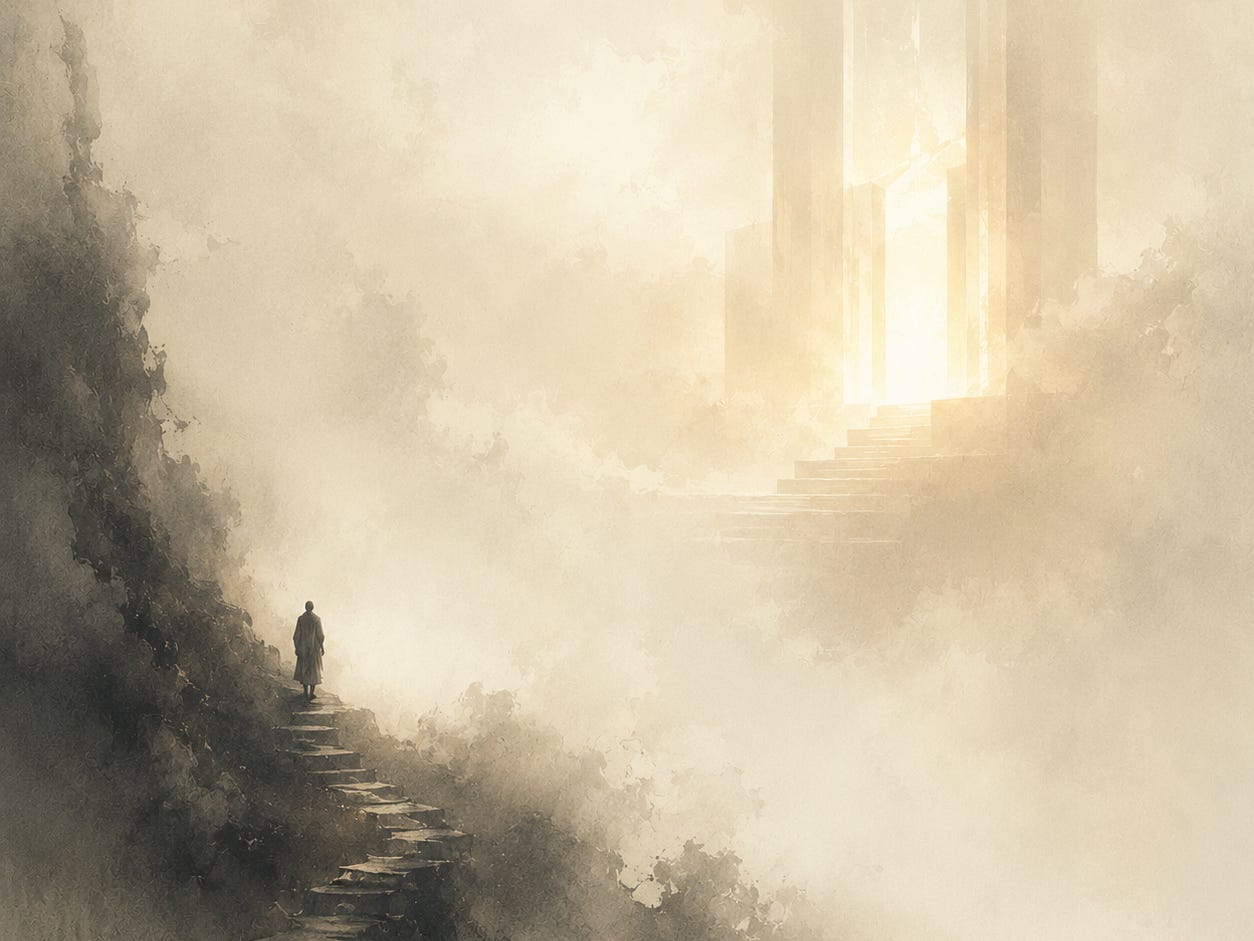
It didn’t ban the staircase. It just built the stairs broken and dark, then installed a beautiful, fast elevator right beside them.
The elevator is called consumption.
Buy that sound system and you’re “a person with taste.” Drive that car and you’re “successful.” Use that brand of cookware and you’re “someone who lives beautifully.” The identity comes pre-packaged. You just choose one, swipe your card, and the belonging is complete.
And this process makes you feel full. Not painful — full.
You think you’ve found yourself.
But what you’ve lost is precisely the gap.
A person who claimed a self through consumption has no distance from the external world. You no longer stand outside society to look at it — you are society, instantiated in you. The inner voice that might have said no was never built.
So when someone says “working yourself to exhaustion is a blessing” — you nod.
Not because you actually agree. But because the “you” who could have stood up and pushed back was never formed. Without the judgment that only comes from being ground down by a long and painful process, you have no capacity to refuse. You don’t even feel the need to.
Think about the delivery worker.
Out on the road every day — running red lights, riding through rain, trading his body and time for a few thousand yuan a month. After rent, after living costs, years of saving — and then one moderately serious illness puts him in debt.
Is this right?
If you’ve never gone through that painful process of becoming yourself, you might genuinely not feel the need to answer that question. Because the inner voice that gets angry, that questions, that says this is wrong — it quietly withered away the moment you chose the elevator.
The purchased self feels full.
But full and real are not the same thing.
Full is what you feel after receiving a ready-made answer. Real is what you feel after a long time groping in the dark — until your hand finally touches something that belongs only to you. It’s rough. It’s not beautiful. But it’s yours. You made it yourself, slowly, through suffering.
That suffering is not an obstacle to route around.
It is the only path to becoming yourself.
Because you forged it, that “you” has the standing to say no. Has the capacity to see what’s wrong. Has the possibility — in a world that has built its elevator to be endlessly beautiful — of choosing to take the broken stairs.