

Have you ever done this —
Researched everything before you left. Which day to go where. What time to arrive. The exact angle for the photo. Which restaurant the guides recommend. How to avoid the crowds.
A schedule with no gaps. Every hour accounted for.
Then you come home, scroll through your photos, and realize every single one looks identical to the pictures in the guides.
You replicated someone else’s trip. You were an executor.
And you can’t quite say what went wrong — nothing did, really. You hit every spot. You ate everything on the list. The photos turned out well.
The other extreme is also real.
No plan at all. Just follow your heart. And then you’re stranded somewhere unfamiliar with nowhere to sleep, you’ve missed the last bus, your phone has no signal, and you don’t speak the language.
That isn’t freedom. That’s panic.
When you’re in a panic, your senses shut down. There’s nothing to experience.
So the question seems to be about *how much* to plan.
But I don’t think that’s really the question.
The real question is: what you’re planning, and what you’re leaving empty on purpose.
There are two kinds of planning, and most people collapse them into one.
The first is foundation planning — visas, flights, somewhere to sleep, a basic sense of where it’s safe to go. This is infrastructure. Skip it and the trip falls apart immediately. It has nothing to do with the quality of your experience, but it’s the condition that makes experience possible.
The second is experience planning — which landmark at what time on which day, which camera angle, which restaurant some guide recommended. The more detailed this gets, the more you’re executing someone else’s trip rather than living your own.
The anxiety most travelers feel doesn’t come from under-doing the first kind. It comes from using the second kind to fill every space that should have been left empty.
That empty space isn’t laziness. It isn’t an oversight.
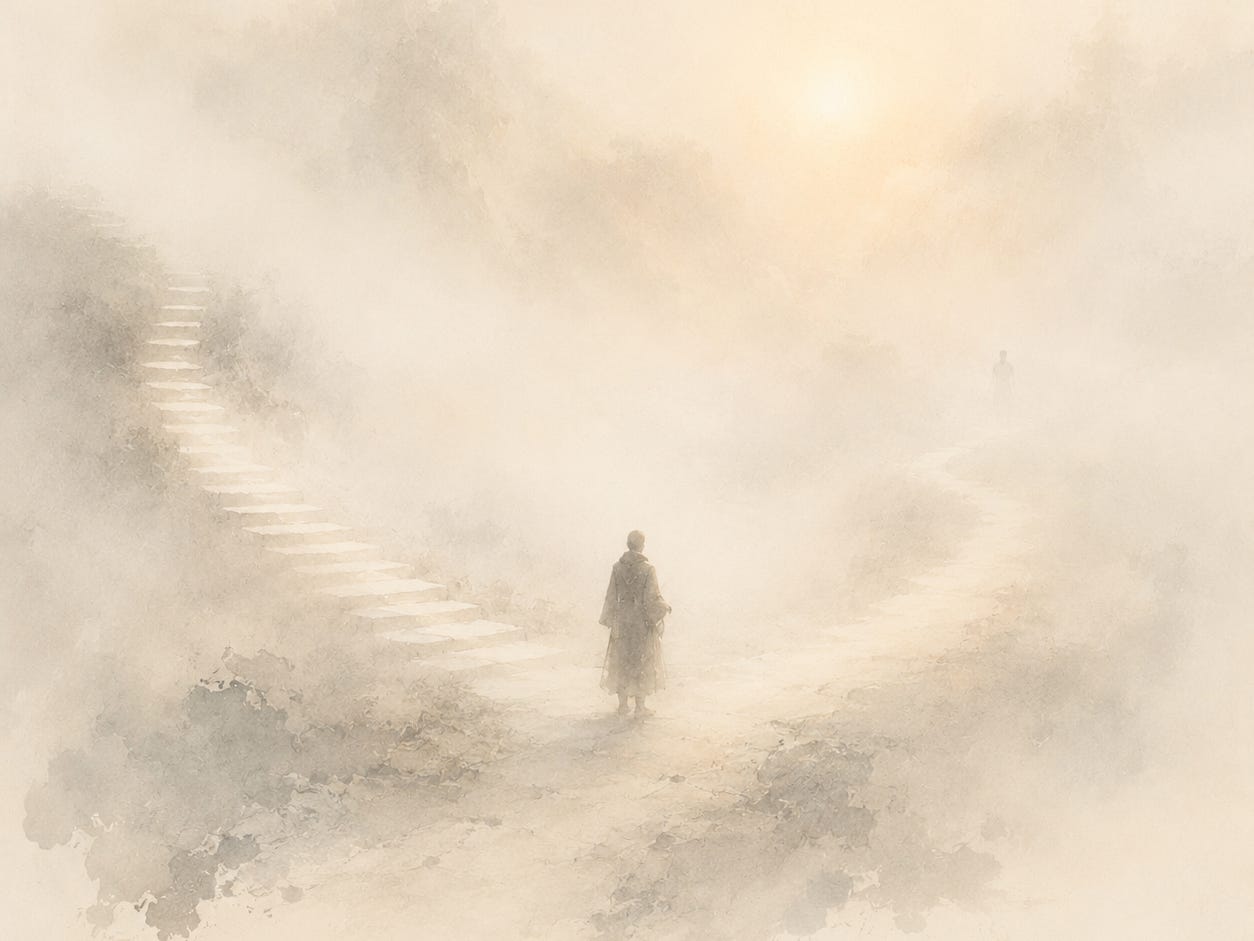
It’s a door you’re leaving open for the unexpected.
The things you actually remember from a trip are almost never the things you planned — it’s the alley you wandered into that had a restaurant with no sign, the afternoon you got lost and ended up somewhere better, the stranger who said something to you that you’re still thinking about.
There’s a word for this: serendipity.
But serendipity isn’t a gift that falls on you at random.
It requires you to be in a particular state in order to receive it.
An over-scheduled traveler still encounters the unexpected. But their first response is *”this is messing up my plan”* — and they spend their energy getting back on track.
The unexpected arrived. They didn’t pick it up.
Someone who’s done the foundation work but left genuine gaps in their schedule — when the same unexpected thing happens, they might stop. Look around. And follow it.
The real purpose of planning isn’t to design your experience.
It’s to make you safe enough to relax. Relaxed enough that when something unexpected happens, your first instinct isn’t “this is a disaster” — it’s “that’s interesting.”
Once in Xinjiang, my drone went down. Crashed on a mountainside at over five thousand meters.
I had altitude sickness. No trail. I climbed for over an hour.
When I finally found it, my first thought was to get back down — stay on schedule, keep shooting, follow the plan.
Then I looked up.
The landscape in front of me stopped me cold.
It was the first moment in the entire trip that I was actually *present.* Not because I’d planned it. Because the unexpected had knocked me out of task mode and into that half hour on the mountain.
I sat there for thirty minutes. Told my friend I needed to rest.
That was an excuse. The real reason was that I wasn’t ready to go back to the plan yet.
So what does over-planning actually look like?
It’s not about how many days you’ve mapped out, or how deep you went into the research.
It’s whether your itinerary has a space for “I don’t know what’s going to happen here.”
That space doesn’t have to be large. An afternoon. A morning. A walk with no destination.
But it has to be genuinely empty — not “backup option,” not “if there’s time,” but truly unfilled, truly unknown.
That emptiness is the only door serendipity can actually walk through.
You didn’t go on this trip to execute a guide.
You went to encounter things you didn’t know you’d encounter before you left.
But those things don’t seek out someone whose every minute is already spoken for.
They only walk through a door that’s been left open.